The Paper Social Feed: Why a Village Noticeboard Belongs in Your Booking Research
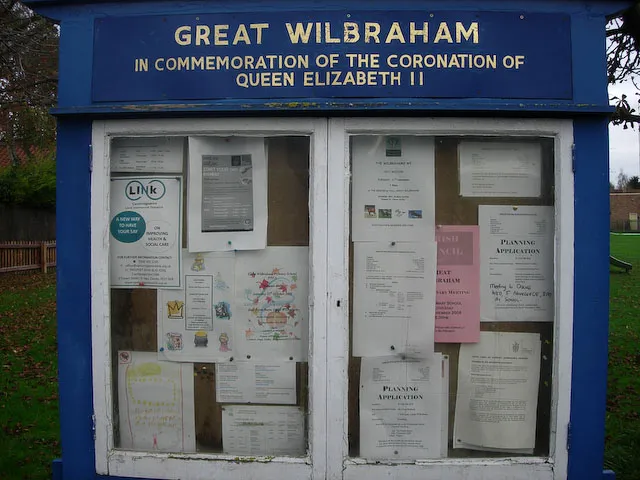
Photo: Hugh Venables, CC BY-SA 2.0, via Wikimedia Commons
Most booking research happens in a hurry: a scroll through photos, a glance at the menu, a check on whether the dog can come. All useful. But there is a humbler source of intelligence, usually found at the entrance to the village hall or pinned inside the porch of the inn itself. The noticeboard.
It is not glossy. It is not curated. That is exactly why it is worth reading.
The board as a social weather forecast
A noticeboard tells you what a village does on a Tuesday. If the quiz night poster is dog-eared and updated with a new date, the pub has a rhythm. If the parish council minutes are pinned neatly with a thanks to the volunteers who cleared the footpath, you are in a place where people turn up. If there is a cake sale for the church roof, a lost dog notice with a mobile number torn into tabs, and a choir practice card that has been there since Michaelmas, you have a fairly detailed picture of local life.
None of this tells you whether the bed is comfortable. It tells you whether the village will feel alive when you arrive — and whether the inn is likely to be the kind of place where the bar quietens when a stranger walks in, or where someone shifts along the bench to make room.
What's pinned, and what it's really telling you
Start with dates. A board crowded with events for the coming fortnight suggests a village with momentum. A board where every card is for something that happened in September, and it is now November, suggests either a sleepy season or a noticeboard nobody maintains. Neither is automatically bad — some people book a rural escape precisely to avoid a busy calendar — but you should know which you are getting.
Look at the handwritten additions. A printed poster for a folk night with 'SOLD OUT' scrawled across it is a good sign. A typed timetable for the mobile library with a biro note saying 'now Thursdays' is even better: it means someone is paying attention. A poster for a Christmas fair that has been amended three times tells you the organiser is a trier, which is usually the best kind of person to have in a village.
Then there are the small civic notices that reveal more than they intend. A defibrillator location map. A footpath diversion due to a fallen ash. A warning about parking near the church during the harvest supper. These are the things that make a place feel looked-after. They also tell you what might affect your weekend: if the only route to the pub across the fields is closed for drainage works, you will want to know before you pack the walking boots.
Read between the lines
Noticeboards have layers, like a good suet pudding. The top layer is this week. Beneath it are the cards that have been there long enough to curl at the corners. That curling is information. A yoga class that has survived two seasons is probably welcoming. A 'for sale' notice for a ride-on mower that has been pinned since spring might mean the owner is optimistic, or that nobody in the village needs a ride-on mower.
Pay attention to what is missing, too. No notices at all can mean a village with no hall, no church, no pub events and no community — or simply a board in the wrong place. Check the inn's own porch as well as the hall. Many country pubs keep a smaller board for their own events: steak night, open mic, a charity raffle. If the inn is running things, the village is likely to gather there. If the inn's board is blank while the hall is thrumming, you may be booking a lovely room above a quiet bar — fine for some, less fine if you wanted company.
The follow-up questions worth asking
The noticeboard is not a substitute for talking to the inn. It is a prompt for better questions. Ring or email before you book and ask something specific: 'I saw the parish council notes mention the footpath behind the church is closed — is there another walk to the next village?' or 'Is the quiz night still on the second Thursday? We're arriving that afternoon.'
You will learn as much from the reply as from the answer. A quick, human response — even if it is 'I'm not sure, let me ask someone' — suggests an inn plugged into its village. A vague 'I don't really know about that' is not a red flag on its own, but it tells you the bar may not be the village's front room.
Ask, too, about the things that do not make it onto cards. Is there a village shop? Does it open on Sundays? Is the church bell-ringing practice a weekly event or a one-off? Does the pub take bookings for Sunday lunch, or is it first come, first served? These are the practicalities that shape a weekend more than thread count.
When a quiet board is the point
It is worth saying that a sparse noticeboard is not a failing. Some of the best country inns sit in villages where the main event is the weather. If you are booking for a winter stay and the board offers nothing more than a carol service and a bin collection change, that might be exactly the escape you wanted: long walks, early dinners, no pressure to be sociable.
The trick is to match the board to your mood. A lively board and a quiet inn can work beautifully — you can dip into the quiz and retreat upstairs. A quiet board and a lively inn is rarer, but it happens: the pub becomes the village's social life by default. Either way, five minutes at the door will tell you more than an hour of scrolling.
A small ritual worth keeping
Next time you book a rural weekend, arrive a little early. Park, stretch your legs, and read the board before you check in. It is the closest thing a village has to a live feed, and it is updated by people who actually live there. You will not find a star rating pinned to it. You will find something better: a sense of whether the place is cared for, and whether you will be glad you came.