Lane Lines and Lit Windows: Reading the Road to a Country Inn
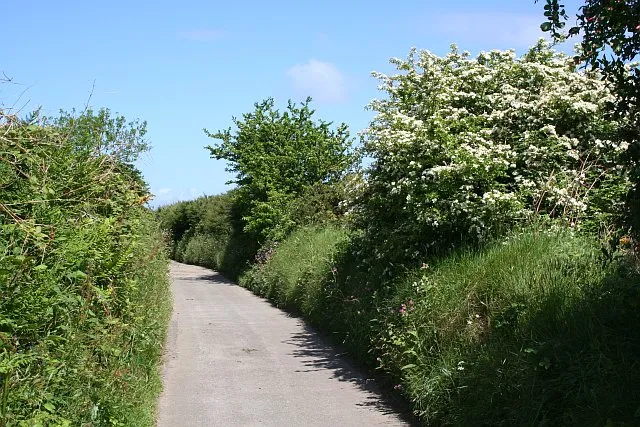
Photo: Tony Atkin, CC BY-SA 2.0, via Wikimedia Commons
The last mile to a country inn is not really about driving. It is a sequence of small declarations. The lane narrows, the hedgerows close in, a sign appears at an angle that suggests someone actually looked at it, and suddenly you are reading a place before you have switched off the engine. At Whitehouse Country Inn, we think that approach deserves more attention than it usually gets. It is the handshake before the hello.
The last bend is a handshake
A good country lane does not need to be wide, smooth or straight. It needs to be honest. You can learn a lot from how a route behaves in its final half-mile. Are the passing places clear, or have they been left to silt up with leaves and gravel? Is the surface patched with care, or peppered with potholes deep enough to hold a pint? Neither is a deal-breaker in rural Britain, but the pattern matters.
A verge that has been trimmed back before the winter rush suggests someone is thinking ahead. A lane that is overgrown right up to the wing mirrors in November might simply be a working farm route, of course. Context is everything. But if the road to the door feels defended rather than welcoming, it is fair to ask whether that same scarcity of attention carries through to the rooms.
Verges, signs and the village edge
The village edge is where an inn starts to introduce itself. Look for the small things: a fingerpost that is legible, a speed sign that has not been swallowed by ivy, a noticeboard with something current pinned to it. These are not proof of a great kitchen, but they are evidence of a place that still looks outward.
Signage is a particular pleasure. A well-run rural inn tends to guide you without shouting. One clear board at the junction, another at the drive, perhaps a modest light above the name. What you are hoping for is confidence, not clutter. A hedge full of laminated arrows can feel like panic. No signage at all after dark can feel like a secret you were not invited to share.
At the village edge, notice how the inn sits in relation to the houses around it. Does it feel like part of the place, or like a wedge driven into it? A pub that shares its lane with cottages, a church and a farmyard usually has to be a good neighbour. That is often a better recommendation than any online gallery.
What the car park says before you switch off
Car parks are underrated storytellers. Gravel that has been raked is nice. Gravel that has been left to become a series of puddles is a different kind of message. Marked bays are not essential in the countryside, but a sensible layout is. So is lighting that helps you find your way without turning the whole yard into a forecourt.
Look for the useful details. Is there a bike rack, even a simple one? A boot brush? A bin that is not overflowing? A designated spot for deliveries so that guests are not blocked in? These are not glamorous signals, but they suggest a team that understands how a rural stay actually works.
If you are arriving in winter, the state of the car park tells you something about morning too. A dark, icy surface with no grit in sight is a small warning. A clear path to the door, even if it is just a swept line through the leaves, is a small kindness.
Light and the after-dark arrival
By mid-November, many arrivals happen in dusk or full dark. This is when the approach becomes especially revealing. A single lit window, a warm porch lamp and a sign you can read from the car are worth more than any amount of exterior design. You want to feel expected, not spotlit.
Too much light can be just as off-putting as too little. Floodlights that bleach the stonework, security lamps that snap on like accusations, a neon sign in a village that has otherwise gone to sleep. The best winter welcome is usually modest: a glow at the bar window, a lamp over the door, a clear route to reception.
If you are booking ahead, this is a fair question to ask. Not every inn has someone on the door at ten at night, and that is fine. But a good one will tell you exactly where to park, which door to use and whether the kitchen can still feed you. The approach should not be a treasure hunt.
Postcodes, passing places and practical kindness
The rural postcode is a wonderful invention with a mischievous sense of humour. It can cover a farm, a hamlet and three separate driveways. A well-run inn knows this. Its website will say something like: ignore the satnav at the last turning, look for the red phone box, and follow the track for two hundred yards. That sort of note is not a quirk. It is hospitality in advance.
So before you set off, read the directions page properly. If the inn has taken the trouble to describe the final approach, take that as a good sign. If the only guidance is a postcode and a promise, allow a little extra time and keep an eye out for the lane that looks too narrow to be right. It usually is right.
The short walk from car to door
Once you park, the last mile continues on foot. The crunch of gravel, the smell of woodsmoke, the sound of a kitchen fan or a radio in the bar, the presence of a boot rack or a stack of umbrellas: these are the details that tell you whether the inside will match the outside. A warm threshold is a promise. A dark side door with no instructions is a question mark.
None of this is about finding reasons to turn around. It is about noticing what is already being said. A country inn can be scruffy and superb. It can be immaculate and hollow. The approach will not give you the whole answer, but it will give you better questions to ask when you walk in.
And that is the real pleasure of the last mile. It turns a booking into a bit of quiet observation, a chance to read the landscape and the people who keep it. By the time you reach the door, you are not just arriving. You are already beginning to understand the place.