Frost, Draughts and the Honest Log Fire: A Winter Inn Booking Audit
Photo: Jaggery , CC BY-SA 2.0, via Wikimedia Commons
Winter is the season when a country inn has nowhere to hide. The lanes are dark by half past four, the boots are wet, and the first thing you want is not a styled basket of logs but a room that holds its heat. That is why a winter booking deserves a slightly different conversation from a summer one. You are not being fussy. You are doing the same thing a good innkeeper does when the forecast turns: checking the basics before the guests arrive.
Start with the building, not the basket of logs
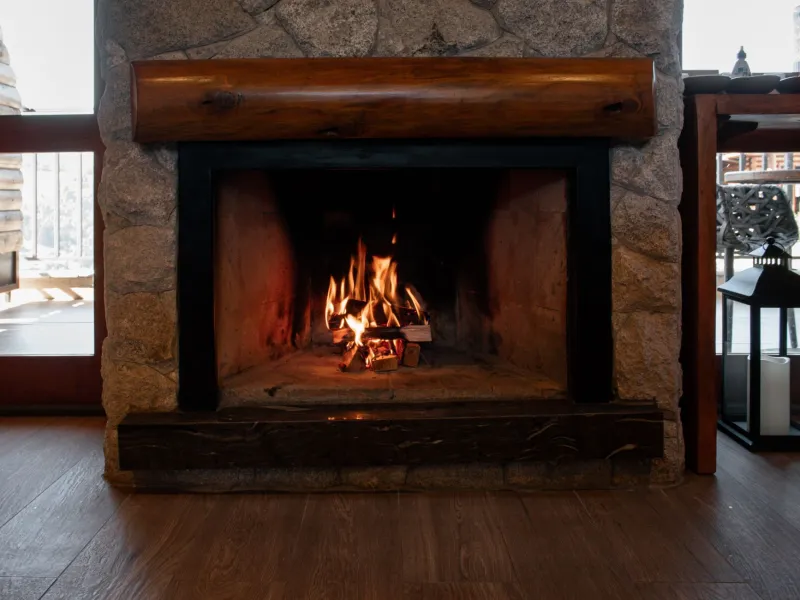
A log fire in the bar is a mood, not a heating system. Ask whether the bedrooms have central heating, whether it stays on overnight, and whether there are extra blankets in the wardrobe. If the inn is old — and the best ones usually are — ask how the room handles cold weather. A single-glazed sash window and a thin curtain can look charming in June and feel quite different in January. It is fair to ask if the room has a radiator you can control, or whether the heating is on a timer that clicks off at ten.
Room position matters too. Above the bar can be warm and lively; at the end of a corridor can be quieter and colder. Neither is wrong, but you should know which you are booking. If you feel the cold, say so when you book. A decent inn would rather put you in the warmer room than have you sitting on the bed in your coat.
The drying room is the winter luxury
Walking gear, wet coats, a dog towel, someone's sodden gloves — winter weekends generate damp. Ask whether there is a drying room, an airing cupboard, or at least somewhere sensible to hang waterproofs. A boot rack by the door is a good sign. A dehumidifier humming away in a back room is unglamorous and worth its weight in gold.
If the answer is 'just hang it in your room', that is not necessarily a deal-breaker, but it does change how you pack. Bring fewer things, choose quick-drying layers, and accept that the bathroom may look like a laundry by Sunday morning. The point is to know before you arrive, not to discover it at bedtime.
Dinner without moving the car
One of winter's small pleasures is not driving after dark. Ask what the kitchen does on the nights you are staying: is food served all evening, is there a bar menu, and is there anywhere else within walking distance if the inn's kitchen is closed? A mile down an unlit lane is a pleasant stroll in July and a different proposition in ice.
If the inn is the only place to eat, check the serving times carefully. Winter hours can be shorter than the website suggests. A quick email asking 'what time does the kitchen stop taking orders on a Friday in January?' will tell you more than a glossy photo of a pie.
Weather, cancellation and the honest deposit
Ask what happens if snow closes the road or the trains stop. Most inns have a standard cancellation policy, but weather is its own category. A good inn will usually prefer to move your booking than have you risk a lane in a hatchback. Ask whether they will rebook without penalty if there is a Met Office warning, and get the answer in writing if you can.
This is not about being difficult. It is about recognising that rural winters are unpredictable. The inns that handle this well tend to be the ones that handle everything else well too.
Small comforts that separate cosy from cold
A winter inn earns its reputation in the details: a hot water bottle on the bed, a spare throw on the armchair, fresh milk for tea, a torch by the door, a grit bin somewhere within reach. Breakfast matters more in winter too. Ask whether it starts early enough for a walk, or late enough for a lazy morning. Ask if there is somewhere to sit by the fire after dinner, rather than being gently moved towards the door at ten.
The email to send before you book
Copy and paste these, adjust to taste, and see how the inn replies. The tone of the answer will tell you as much as the content.
- Is the bedroom heating controllable, and does it stay on overnight?
- Are there extra blankets in the room?
- Is there a drying room or somewhere to hang wet walking gear?
- What time does the kitchen serve dinner on a Friday and Saturday in winter?
- Is there another pub or restaurant within safe walking distance?
- What is your policy if snow or ice makes travel unsafe?
- Do you have a torch, grit, or local advice for guests arriving after dark?
- Is breakfast included, and what time does it start?
A country inn that answers these questions warmly and specifically is likely to be a country inn that has thought about winter. The log fire will still be there. It just won't be doing all the work.